Footwear Impact, Compression Puncture, Dielectric Resistance – Tested by EN ISO 20345 Test Method
Nov 24, 2026
The EN ISO 20345 standard defines performance requirements for safety footwear, covering impact, compression puncture and dielectric resistance. EN ISO 20345 specifies 100 J or 200 J impact energy for toe cap testing, 15 kN compression load for toe cap crush resistance, defined nail geometry for sole puncture testing, and AC withstand voltage limits with controlled leakage current for dielectric safety footwear.
Safety footwear mechanical and dielectric testing is a core routine within the personal protective equipment industry. It verifies whether safety footwear components protect feet against crush, falling‑object impact, sharp‑object penetration and electric shock hazards. These lab tests simulate workplace real‑life hazards under strictly controlled laboratory conditions. For mechanical tests, defined striker, compression platens or sharp test nails act against footwear specimens. For dielectric testing, controlled high‑voltage AC power is applied across the complete shoe sample. All tests are performed under standardized conditioning environments to guarantee repeatable test outcomes.
Personal Protective Equipment — Safety Footwear (EN ISO 20345) Test Methods for Safety Footwear (EN ISO 20344)
1 Relevant Terms and Requirements
Tests are carried out following the procedures set out in EN ISO 20344.
- Toe‑cap impact resistance test: Safety Shoes Impact Tester (EN ISO 20344 Clause 5.4) - Compression resistance and puncture penetration test: Compression And Puncture Tester (EN ISO 20344 Clause 5.5, 5.9, 5.10) - Dielectric / electric‑shock resistance test: Footwear Electric Shock Resistant Tester (EN ISO 20344 Clause 5.13, EN 50321)
1.1 Impact Energy
In safety footwear impact testing, impact energy refers to kinetic energy delivered by a falling impact hammer onto the toe-cap area of footwear specimens. It is determined by hammer mass and free-fall drop height.
The impact energy follows requirements defined by target product standards. It can be set to 100 J or 200 J for EN ISO safety footwear. Different regional standards specify different hammer shapes and mass: wedge-shaped hammer for EN ISO protocols; cylindrical spherical striker for ASTM testing protocols.
1.2 Compression Load
Compression load means static force applied vertically onto safety shoe toe-caps. For EN ISO 20345 safety footwear, the standard compression test load is 15 kN. The test records residual internal clearance under the toe-cap after force application, to evaluate whether the protective space remains sufficient for human toes.
1.3 Puncture Penetration
Puncture penetration describes the condition when a standardized sharp test nail passes through the footwear sole and anti-puncture insert under controlled increasing force. Test nails have specified tip geometry and diameter. The maximum force resisting full nail penetration is recorded as puncture-resistance performance value.
1.4 Dielectric Withstand Voltage & Leakage Current
Dielectric withstand voltage is the AC high-voltage applied across insulated safety footwear specimens during electrical-hazard testing. Leakage current is the small electric current flowing through the shoe specimen under test voltage. Test equipment monitors leakage-current threshold; once the threshold is exceeded, dielectric breakdown is considered to have occurred.
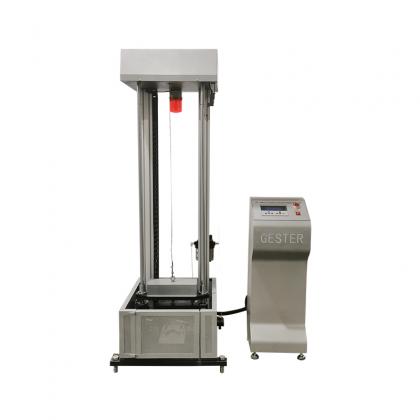
Safety Footwear Impact Tester Equipped with safety protective fence, separated control cabinet, electromagnetic hammer lifting and grabbing device, dual buffer cylinders to prevent secondary impact. It supports configurable drop height and impact hammer for EN ISO standard. It can deliver impact energy of 100 ± 2 J or 200 ± 2 J.
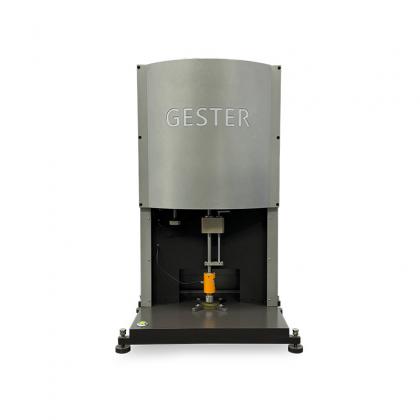
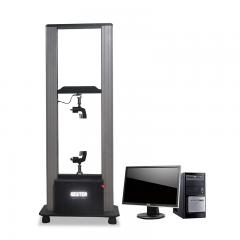
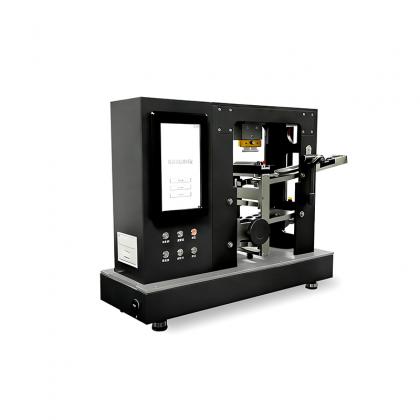
Safety Footwear Compression Puncture Test Equipment supports toe-cap compression test and sole anti-puncture penetration test in one single unit. It applies vertical force at constant speed, records force value and displacement, and judges penetration status of the test nail.
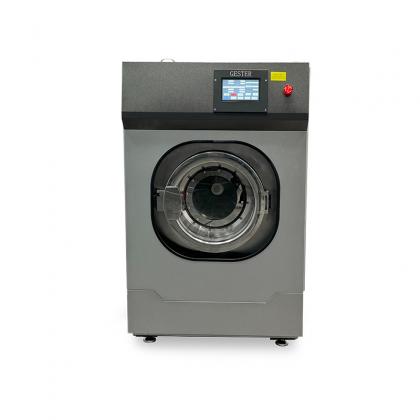
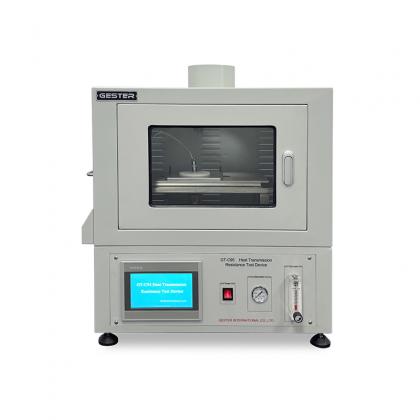
Automated high-voltage adjustment system. Safety Shoe Dielectric Resistance Tester controls voltage rising rate, monitors real-time leakage current, and stops test automatically when breakdown or over-limit leakage current occurs.
3 Testing Principle for Impact, Compression-Puncture and Dielectric Resistance
Safety-footwear hazard-resistance testing relies on dedicated laboratory instruments to reproduce typical workplace hazards, measuring mechanical deformation, penetration status and electrical insulation breakdown condition for complete safety-shoe specimens.
For impact-resistance test: The whole safety-shoe specimen is fixed on the impact tester platform. A calibrated impact hammer falls from preset height to deliver defined kinetic energy onto the toe-cap region. After impact, the residual internal clearance underneath toe-cap is measured and compared against standard limit value to judge pass-fail status.
For compression-puncture test: In compression mode, vertical static load is applied slowly onto toe-cap at constant compression speed; after reaching target load, residual clearance under toe-cap is measured. In puncture-resistance mode, standardized sharp nail moves upward at controlled speed against footwear sole assembly. The instrument records force and judges whether full penetration occurs through sole and anti-puncture insert.
For dielectric resistance test: The insulated safety shoe sample is placed inside the high-voltage test chamber. Conductive media fill inside shoe cavity. Controlled AC high-voltage is applied between inner conductive medium and external test base. The instrument continuously monitors leakage-current value. When leakage-current exceeds threshold or dielectric breakdown happens, test terminates automatically.
All measured parameters are compared against performance requirements defined in EN ISO 20345 to determine test outcome.
4 Sampling
Representative finished safety footwear samples are taken from production batches. Avoid samples with visual defects, cracks or mechanical damage. Separate shoe units are required for impact test, compression-puncture test and dielectric-resistance test; reuse of one identical shoe for multiple destructive mechanical tests is not allowed.
Unless contract or standard specifies other pre-treatment, samples shall be conditioned in standard test atmosphere before test execution.
5 Testing Procedures
5.1 Sample Conditioning
Condition safety-footwear specimens for at least 4 hours in standard conditioning atmosphere before commencing test. All testing procedures shall be performed within the specified standard-condition laboratory environment.
5.2 Impact Resistance Test Procedure
Secure whole safety-shoe specimen firmly onto the impact-tester base fixture, aligning toe-cap area precisely under impact hammer trajectory. Install corresponding impact-hammer assembly. Close safety protective fence. Set required impact-energy parameter (100 J or 200 J). Lift impact hammer to pre-calculated drop height. Trigger test cycle; hammer falls freely and strikes toe-cap once. After impact completes, take out shoe specimen and measure residual clearance underneath protective toe-cap. Record measured value.
5.3 Compression and Puncture Resistance Test Procedure
Compression test: Mount safety-shoe sample on compression fixture. Align compression platen to apply vertical force onto toe-cap. Set target compression load and compression speed. Start test. After reaching target load, hold load for specified dwell time. Measure residual inner clearance of toe-cap and record data.
Puncture resistance test: Replace fixture to puncture configuration, install standardized test nail. Place footwear sole assembly onto test fixture with nail tip facing towards sole bottom surface. Start test cycle. Nail advances upward at constant speed against sole insert. Instrument records force value. Stop test either when full penetration occurs or maximum specified test force is achieved. Record penetration-resistance force value.
5.4 Footwear Dielectric Resistance Test Procedure
Place safety-shoe specimen inside high-voltage test chamber. Fill inner cavity of shoe with specified stainless-steel conductive balls. Connect high-voltage output and ground-side test base correctly. Close test-chamber door. Configure test parameters: AC voltage range, voltage-rising rate, leakage-current trip threshold and test holding duration. Initiate test program. Voltage rises automatically following defined ramp-up profile. Instrument monitors real-time leakage current. Test stops automatically upon voltage-hold completion or when leakage-current trip point triggers. Record whether dielectric breakdown occurs, test-voltage level and leakage-current readings.
For compression-resistance test: After applying specified compression load, measure residual toe-cap inner clearance. Evaluate pass-fail status according to standard-defined clearance requirement.
For puncture-resistance test: Record the maximum force value before nail penetrates through sole-insert assembly.
- Pass: Penetration does not occur at required test force level - Fail: Sharp nail fully penetrates through anti-puncture insert under specified force level
6.2 Dielectric-Resistance Evaluation
- Pass: Specimen holds target test voltage for required dwell time without breakdown and without exceeding leakage-current threshold. - Fail: Dielectric breakdown, flash-over or leakage-current exceeds standard-specified trip limit during test cycle.



 português