Qual Norma de Testador de Compressão e Perfuração Você Deve Usar?
Por Que os Laboratórios Não Conseguem Selecionar uma Norma de Teste Adequada
O que é o Testador de Compressão e Perfuração?
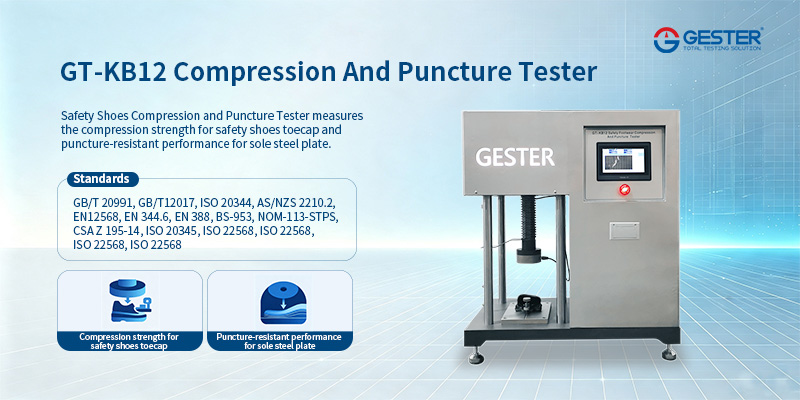
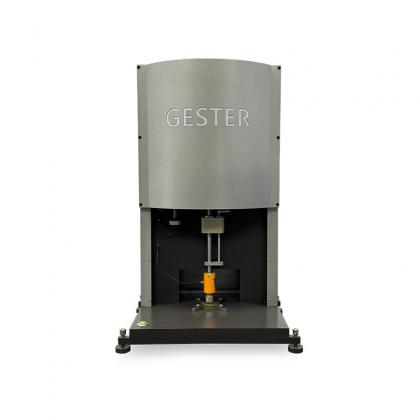
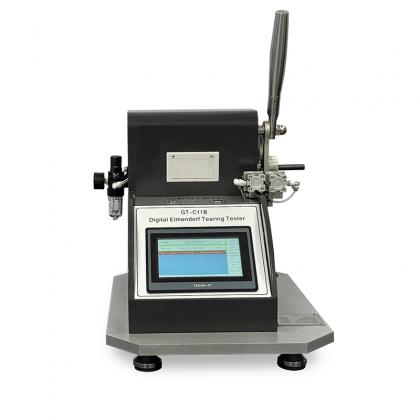
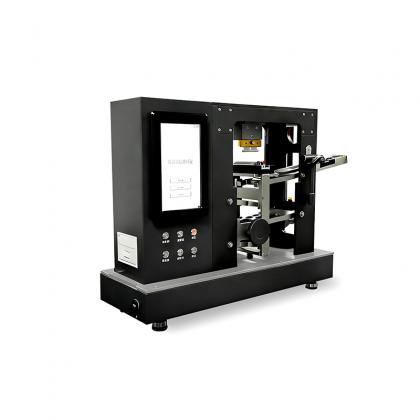
O testador de compressão e perfuração para sapatos de segurançaé a medida da resistência à compressão das biqueiras de sapatos de segurança e do desempenho de resistência à perfuração das placas de aço da sola após o carregamento mecânico padronizado. É adequado para todos os tipos de testes de compressão de biqueira de sapatos de segurança e testes de resistência à perfuração de placas de aço de sola, ajudando a prevenir lesões acidentais aos operadores no local de trabalho, verificando o desempenho de proteção dos sapatos.
Este é um teste de segurança essencial adotado pela maioria das indústrias de calçados de segurança. Além disso, este teste é um requisito principal para certificação de conformidade, como a marcação CE, certificação ISO e conformidade com a norma GB.
Como os Principais Sistemas de Normas se Diferenciam?
|
Recursos |
ISO |
EN |
ASTM |
|
Principais Regiões |
Global, Europa |
Europa |
América do Norte |
| Norma de teste |
ISO 20344, ISO 20345, ISO 22568 |
EN12568, EN 344, EN 388 |
ASTM F2412 , ASTM F2413 |
Seleção por Área
Para as indústrias de calçados de segurança que exportam para os mercados europeus ou globais, as normas ISO 20344 e ISO 20345 são os melhores padrões de teste de compressão e perfuração.
As indústrias que fabricam produtos para os mercados da UE com marcação CE devem priorizar as normas da série EN para testes. Essas normas são a base direta para a certificação CE.
Para os mercados no Canadá, México, Austrália e Nova Zelândia, normas regionais correspondentes, como CSA Z 195-14, NOM-113-STPS e AS/NZS 2210.2, devem ser selecionadas para conformidade local.
De acordo com o Tipo de Produto
Sapatos de trabalho diários e sapatos de segurança para indústrias leves precisam de métodos de teste de grau básico para medir seu desempenho de compressão e perfuração.
Botas de trabalho industrial, sapatos de segurança para construção civil e calçados de mineração geralmente exigem níveis de força mais altos e condições de teste mais rigorosas devido aos seus cenários de trabalho de alto risco.
Para fins de pesquisa e desenvolvimento, os laboratórios frequentemente comparam as normas ISO, EN e GB/T para otimização do desempenho de materiais.
Principal Padrão Global: ISO 20344 e ISO 20345
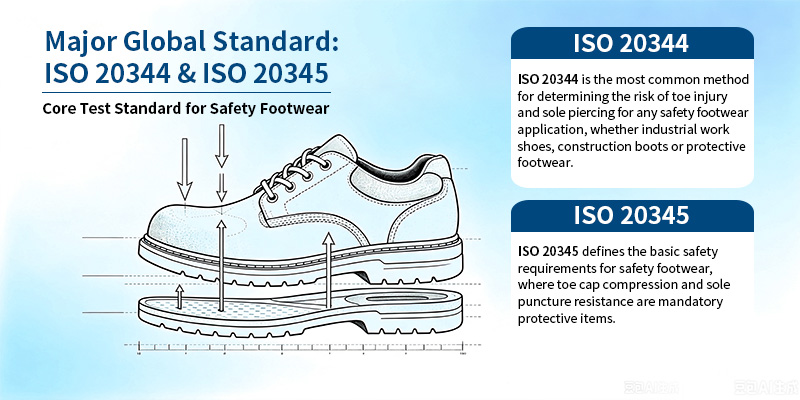
Padrão de Teste Principal para Calçados de Segurança
O teste de compressão e perfuração especificado em ISO 20344 é o método mais comum para determinar o risco de lesão nos dedos dos pés e perfuração da sola para qualquer aplicação de calçado de segurança, sejam sapatos de trabalho industrial, botas de construção ou calçados de proteção. Os métodos para testar a resistência à compressão e a resistência à perfuração possuem condições definidas. Isso inclui taxa de carga, geometria da sonda, fixação do corpo de prova e critérios de avaliação. Essa padronização garante que os resultados dos testes sejam semelhantes em todas as instituições.
A ISO 20345 define os requisitos básicos de segurança para calçados de segurança, onde a compressão da biqueira e a resistência à perfuração da sola são itens de proteção obrigatórios. Além do teste principal e das normas de produto, a ISO 22568 também fornece especificações suplementares para a verificação do desempenho mecânico de calçados de proteção.
Status Importante da Norma de Teste
Agora, o padrão de teste ISO tornou-se o padrão de teste de compressão e perfuração mais aceito e preferido. É amplamente utilizado e aceito nos mercados europeus e em sistemas de conformidade globais.
Os laboratórios que utilizam métodos de teste não padronizados frequentemente enfrentam uma alta taxa de devolução de produtos devido a falhas na certificação e ao não atendimento aos requisitos reais de segurança no local de trabalho.
Simulação de Perigos Reais no Local de Trabalho
Este equipamento de teste de compressão de biqueira padrão simula parâmetros de perigo mecânico do mundo real para avaliar o desempenho de proteção real do calçado. Este método segue rigorosamente cenários de risco no local de trabalho, como a queda de objetos pesados sobre as biqueiras e pregos afiados perfurando as solas em canteiros de obras e locais de fabricação.
Conclusão
A resistência à compressão e à perfuração é um parâmetro central de segurança para calçados de segurança. Nas indústrias globais de EPI, este testador de compressão e perfuração para sapatos de segurança é ainda mais importante. É um indicador de segurança amplamente utilizado no mundo todo que determina se o produto pode fornecer proteção eficaz aos trabalhadores contra perigos mecânicos no local de trabalho.


 português